
Shipping Strategies
E-Commerce shipping
Shipping to USA
Last Updated
June 25, 2023
12 min.

Written By

Krišs Ģērmanis
Selling to the USA can feel like a wall of customs rules, tariffs, and surprise fees, especially since the rules changed in 2025. Most of that worry comes from not knowing how the pieces fit together. Once you do, it becomes a short, repeatable process. This guide covers why the USA is worth selling to, what US buyers expect, how customs and duties actually work, and how to ship your first parcel to the USA from Latvia, Lithuania, or Estonia.
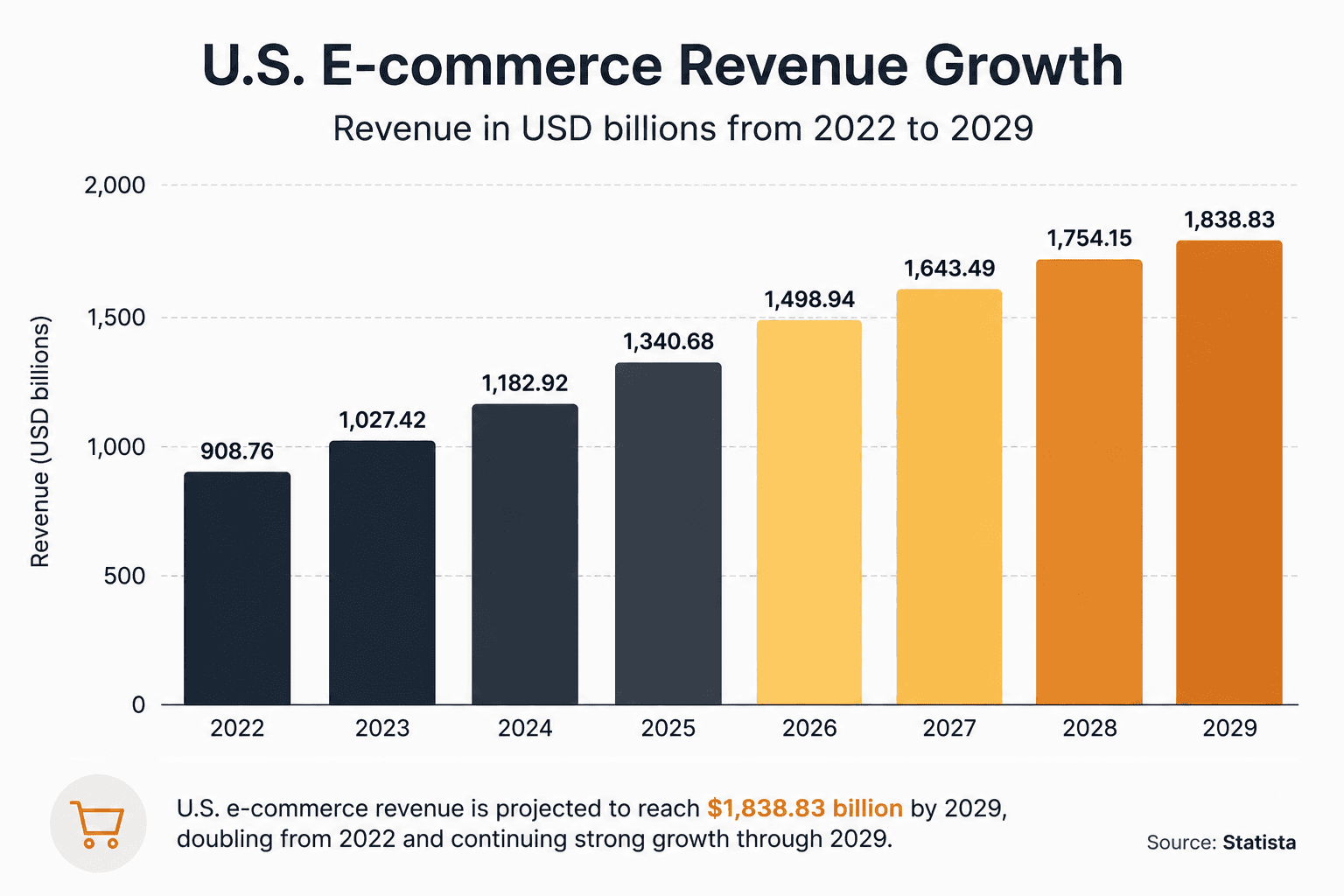
🇺🇸 The U.S. is the world's largest e-commerce market, generating over $1.3 trillion in online sales and offering significant growth opportunities for European brands.
📦 Every shipment to the USA requires customs information, including an accurate product description, HTS code, declared value, and country of origin.
💰 Shipping DDP (Delivered Duty Paid) helps avoid unexpected customs charges for customers and improves the delivery experience.
🚚 Choose the right carrier for each shipment—postal services offer more predictable customs costs, while express couriers provide faster delivery and better tracking.
⚡ Automating customs documents and carrier selection saves time, reduces manual work, and minimizes shipping errors when sending parcels to the USA.
💲 Compare shipping rates before creating a shipment to balance delivery speed, customs handling, and overall shipping costs.
🛍️ Transparent pricing and multiple delivery options increase trust and improve conversion rates among U.S. shoppers.
✅ With the right shipping setup, selling to the USA is far simpler than it seems—accurate customs data and the right tools make international shipping a repeatable process.
Why the US market is worth it
US e-commerce is enormous. In 2025 it reached about $1.34 trillion, more than the entire European e-commerce market combined, which sat at roughly $637.8 billion.
Something else is working in your favour. The US has ended the de minimis exemption that once let low-value parcels enter duty-free, with the final changes taking effect in July 2026. As a result, buyers there now face higher prices, slower deliveries, and cancelled orders, especially on cheap goods from platforms like Shein and Temu. Shoppers are now looking for reliable sellers and direct brands they can trust to avoid nasty surprises at customs. For a smaller European brand that ships properly, that is an opening.
American shoppers already buy from Europe. More than 90% shop online every month, and 33% buy directly from European stores, drawn to distinctive, high-quality clothing, affordable luxury, and brands they can't find easily at home. Half of US consumers discover new brands through social media, where younger shoppers lean on creator and expert recommendations. Beyond fashion, they value European cosmetics, media like vinyl records and specialist books, electronics, vintage items, and homeware.
What US buyers expect
Meeting a few expectations up front is what turns US interest into completed orders.
Clear, all-in pricing. Hidden fees are the single biggest deal-breaker: 31% of shoppers abandon over them. US buyers expect the final price, including duties and shipping, to be visible before they confirm.
Free or included shipping. Around 70% say free shipping is a core expectation, even internationally, and most would rather see the cost built into the product price than added at checkout.
A delivery option that fits their timeline. 81% will abandon a cart if they can't pick a shipping method that matches how quickly they want the item, even though they accept that international delivery takes longer.
The takeaway for your store: show the all-in cost early, ideally with a free-shipping threshold, and offer at least two delivery speeds, an economical standard option and a faster express one. Buyers value the choice even when the fast option costs more.
How US customs and duties work
US duty is charged on the value of the goods you send. As of 24 July 2026, two things apply to every US shipment, postal and express alike: each product needs a full 10-digit HTS code, and the duty is calculated per product from that code and the value, rather than from a single blanket rate. The rate for a given code is set by US trade policy and can change, so check the current rate when you prepare a shipment. Origin still counts: a product made in China, for example, follows China's rate even if you send it from Latvia.
Getting the code right matters. The code, together with a clear product description, is what customs uses to classify your item; if the description does not match the code, customs can reclassify it and change the duty. An accurate 10-digit code and a specific description keep the amount predictable. You can look up the correct 10-digit code for each product in the official US Harmonized Tariff Schedule (hts.usitc.gov), starting from the HS code you already use.
Note: The 10-digit HTS requirement and the end of the flat postal rate both took effect on 24 July 2026. If you shipped under the old system, see [Link: our guide to the July 2026 US customs changes] for a full breakdown of what changed.
Because customs now works this way for postal and express alike, the choice between the two carrier types comes down to speed, tracking, and cost.
Postal: Latvijas Pasts and Omniva
Until 24 July 2026, postal shipments were charged a single flat rate, which made the customs cost easy to predict. That flat rate is gone, and postal now clears the same per-product way as express. What still sets postal apart is price: it is the economical route, with the trade-off of slower delivery and less detailed tracking.
Express: FedEx, UPS, and DHL
Express is the faster route, with more precise tracking the whole way, in exchange for a higher price than postal.
Route | Carriers | Best for | Trade-off |
|---|---|---|---|
Postal | Latvijas Pasts, Omniva | Lower cost | Slower, less detailed tracking |
Express | FedEx, UPS, DHL | Speed and tracking | Higher price |
Duty is now calculated the same way for both, per product from the 10-digit HTS code and the value. Lighter, price-sensitive parcels usually suit postal; urgent or higher-value orders suit express. Most sellers use both and choose per parcel.
Who pays the duty, and what customs needs
Duties can be prepaid by you, the sender, so they are settled before the parcel reaches your buyer, which is called DDP (Delivered Duty Paid). The alternative is to leave them for the buyer to pay on arrival (DAP). Prepaying is what avoids the unwelcome customs bill at the door, and that surprise is a common reason US buyers refuse deliveries or leave poor reviews.
Note: If you sell on Etsy, DAP is no longer an option, as Etsy now requires US orders to be shipped DDP. [Link: Etsy DDP article]
Whichever route you use, customs needs accurate details about what you are sending:
A clear, specific product description
A 10-digit HTS code for each product
The country of origin of the goods
The value of the goods
The recipient's contact details
Give the true country of origin, where the goods were actually made; if you resell items produced abroad, their duty follows that country's rate. Declare the value of your goods correctly. Because duty is only settled after the parcel clears customs, it is billed afterward rather than at the point of sale, so build it into your pricing up front.
The simple way to handle all of it
Doing this on your own would mean opening a separate account and contract with each carrier, then preparing customs paperwork for every parcel by hand. That is where a shipping platform earns its place. On Swotzy you compare all of these carriers side by side and choose the best one for each parcel, with no separate agreement for any of them.
Here is how the parts you have just read about come together in one place.
Every carrier, one account. Latvijas Pasts, Omniva, FedEx, UPS, and DHL are all available directly, so you are not locked into a route and you never negotiate a carrier contract yourself.
Customs paperwork, generated for you. When you create a shipment, you enter what you are sending, the item, its value, weight, country of origin, and 10-digit HTS code, and set yourself as the party paying duties. Swotzy turns that into the customs documents and the commercial invoice automatically, so there is no separate paperwork to chase. It also checks that every product has a valid 10-digit code before you can create the label; it cannot confirm the code is the right one for your product, so choosing it correctly is on you.
DDP handled per carrier. For US shipments, Latvijas Pasts, Omniva, FedEx, and UPS send DDP only, so the sender pays duties by default. DHL also supports DAP, but DDP is the choice that keeps your buyer from being surprised at the door.
Costs shown up front, duties billed after. On express services the customs broker's fee is already included in the shipping price you see. FedEx adds one fixed guarantee fee per shipment that clears customs, covering the fact that FedEx pays US customs immediately and invoices afterward. The duties themselves are settled after clearance, so they arrive on a separate invoice rather than at label creation:
Route | Carriers | When duties are billed |
|---|---|---|
Postal | Latvijas Pasts, Omniva | Once a month, on a Friday |
Express | FedEx, UPS, DHL | Once a week, on a Friday |
Tracking syncs back to your store. Once the label is created, tracking updates flow back to your store on their own, so buyers stay informed without extra work from you.
You can connect your store through an integration, the API, or a webhook, so orders arrive automatically. Supported integrations include Shopify, WooCommerce, Etsy, PrestaShop, Magento, and the API. If your store is connected, check that your import rules include a valid 10-digit HTS code for US orders, since anything shorter will not import cleanly and will need a manual fix. [Link: Swotzy Help Center, updating automation rules for shipments to the USA]
Start shipping to the USA
Sending a parcel to the USA on Swotzy takes five steps:
Register on Swotzy for free.
Enter the shipment details (address, weight, item, and value).
Fill in the customs and product information.
Compare carrier prices and choose the best fit.
Print the label and arrange a courier pickup, or drop the parcel at a collection point.
No contracts, no minimum volumes, no monthly fees. Register, check your rates, and start shipping.
Before you ship to the USA: a quick checklist
Give a clear description, a 10-digit HTS code for each product, the value of the goods, weight, and true country of origin.
Ship DDP so duties are prepaid and your buyer isn't surprised.
Choose postal for lower cost, express for speed and tracking.
Show US buyers clear, all-in pricing and more than one delivery option.
Remember duties are billed after clearance, so price them in now.
Shipping to America takes a little preparation, but none of it is as complicated as it first looks. Get the details right once, and the market opens up.
FREE TO JOIN. FREE TO USE. ONLY PAY FOR SHIPPED ORDERS.
Ready to Manage Your Deliveries Better?
Whether you’re just starting out or scaling fast, Swotzy helps you save on shipping, manage all your deliveries better, and keep your shipping process simple and efficient.